

What Is a Whole House Water Filter and What Are Its Advantages and Disadvantages?
A whole house water filter — sometimes called a point-of-entry (POE) system — ensures that every drop of water entering your home is cleaner and safer. In this guide, we’ll explain how it works, explore the pros and cons, and show why the Puricom DFS-5221 Big Blue Water Filtration System is a smart choice for homeowners seeking reliable water protection.
I consider myself pretty fortunate to have grown up on a farm with our own well. The water we drank was clean and fresh, and I never gave much thought to its quality — except when we went to visit relatives in the city. Then it hit me: “Oh no, the city water tastes awful! I’d better drink plenty before we leave.”
From an early age, I realized that not all water is created equal. But it wasn’t until I got older — and especially after renting my first home and paying the water bills myself — that I began to pay real attention to the quality of the water and how it was being used.
After moving off the farm and living in a home with municipal water, I finally understood why I never liked drinking city water. The water entering most homes carries more than just H₂O—it can contain chlorine, volatile organic compounds (VOCs), pesticides, and even PFAS (“forever chemicals”).
Installing a reverse osmosis (RO) filter for drinking water can make a big difference, but setting up a whole house reverse osmosis system can be very expensive. That’s why many homeowners appreciate the value of a whole house water filter — a solution that treats all the water entering your home, improving not only what you drink but also what you bathe, cook, and clean with. One of the most popular types is the Big Blue Whole House Water Filter.
What Is a Big Blue Whole House Filter?
A big blue whole house filter is a large-capacity water filtration system designed to treat all the water entering your home. Instead of filtering water only at individual taps, this system connects directly to the main water line—ensuring that every faucet, shower, and appliance receives clean, filtered water.
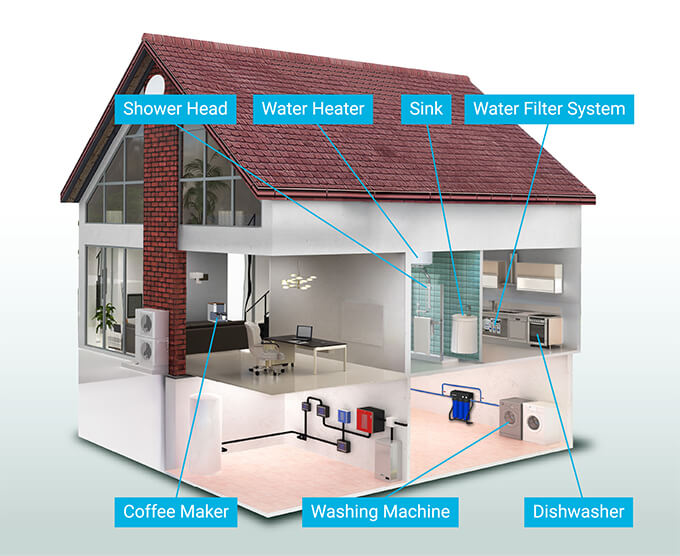
The name “Big Blue” refers to the filter’s distinctive deep-blue color and the extra-large diameter of the filter housing (typically 4.5 inches). These extra-large casings were originally made to hold larger cartridges for high-flow applications, significantly reducing pressure drop compared to standard filters.
Over time, “Big Blue” became a generic term describing heavy-duty whole-house filter systems with large blue housings—setting the standard for both residential and light-commercial water filtration.
Advantages and Pros of a Whole House Water Filter
-
Comprehensive Protection for Your Entire Home
Unlike faucet or under-sink filters, a whole house chlorine water filter treats every water source in your home. Whether you’re drinking, cooking, or showering, you’ll have consistent, clean water throughout the house. -
Effective Removal of Common Contaminants
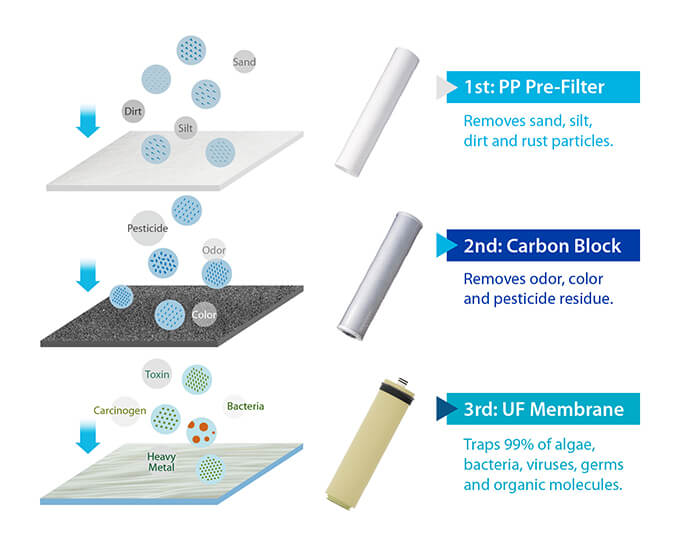
A carbon block filter—like the one used in the Puricom DFS-5221 3-Stage Big Blue Filter—is highly effective at removing:- Chlorine and chloramines (which can dry out skin and damage appliances)
- VOCs, pesticides, and herbicides
- Trihalomethanes (THMs) and disinfection byproducts
- PFAS (“forever chemicals”) with advanced CTO carbon technology
- Unpleasant odors and tastes
If you’re looking for the best whole house water filter for PFAS or the best whole house water filter to remove fluoride and chlorine, a multi-stage system like the Puricom DFS-5221 is an excellent choice.
-
Healthier Showers and Skin
Chlorine exposure through shower steam can be as concerning as drinking it. Whole house systems remove chlorine before it reaches your bathroom, helping prevent dry skin and hair irritation. -
Longer Appliance Lifespan
Filtered water prevents scale buildup and chlorine corrosion in dishwashers, washing machines, and water heaters—extending their life and efficiency. -
A Safer, Healthier Home
With rising concerns about PFAS and other emerging contaminants, an advanced carbon filter gives your home an added layer of protection beyond municipal treatment.
Disadvantages of a Whole House Water Filter
While the benefits are impressive, it’s equally important to understand the disadvantages of a whole house water filter. Knowing both the pros and cons of a whole house water filter will help you make an informed decision.
-
Does Not Soften Hard Water
Standard carbon filters don’t remove calcium or magnesium (the minerals that cause scale). If your home has hard water, a separate softener should be installed before the filtration system. -
Limited Heavy Metal and Fluoride Removal
If you’re asking, “What are the disadvantages of a whole house water filter?” this is one of the main ones. Carbon filters typically do not remove fluoride, sodium, or heavy metals like lead. However, optional cartridges can target these contaminants. -
Maintenance Is Required
Like any system, whole house filters need regular maintenance. Filter cartridges should be replaced every 6–12 months depending on water quality and usage. -
Initial Investment Cost
Compared to simple under-sink filters, a whole house system costs more upfront. Still, many homeowners find that the convenience, protection, and improved water quality justify the expense.
Whole House Reverse Osmosis System: Pros and Cons
A whole house reverse osmosis system can remove nearly all contaminants—including dissolved solids, fluoride, and sodium—but it also has drawbacks.
- Pros: Exceptional purification and total contaminant removal.
- Cons: High cost, complex installation, and the need for water storage and wastewater management.
For most households, pairing a whole house carbon filter with a reverse osmosis system for drinking water is the ideal balance of cost and performance. This combination provides comprehensive protection without the inefficiency of a full-house RO setup.
Why Choose the Puricom DFS-5221 3-Stage Big Blue Whole House Filter
Puricom’s DFS-5221 whole house filter combines:
- Triple-stage filtration (sediment + CTO carbon + UF ultrafiltration)
- High flow rate for large homes
- Durable Big Blue housings for long service life and easy maintenance
This design allows flexibility—you can customize the third stage for fluoride, heavy metals, or microbial protection, depending on your household needs.

Final Thoughts: Reverse Osmosis vs Whole House Filter — Finding the Right Solution
When comparing reverse osmosis vs whole house filter systems, think about your water goals. If you want to remove chlorine, PFAS, VOCs, and other chemical contaminants from every tap while enjoying cleaner showers and better-tasting water, a Puricom DFS-5221 3-stage big blue whole house filter is a practical, affordable solution.
If you also want fluoride or bacteria protection for drinking water, pair it with an under-sink RO system or a specialized third-stage cartridge. Together, they form a complete, smart water filtration solution—giving your family cleaner, safer water throughout your home.
Looking to represent a trusted global water filtration brand?
Partner with Puricom and bring the DFS-5221 Big Blue Whole House Water System to your market. Contact our business development team to learn about distributor opportunities today.
Frequently Asked Questions (FAQ)
Q1: Is a whole house water filter really worth it?
A: Yes. If you’re concerned about chlorine, PFAS, or other contaminants in your home’s water, a whole house filter provides protection for every tap—not just your drinking water. It also helps extend the lifespan of appliances and plumbing fixtures.
Q2: How long do whole house water filters last?
A: Typically, the filter cartridges need to be replaced every 6 to 12 months, depending on your local water quality and usage. The Big Blue housings themselves can last for many years with proper maintenance.
Q3: Does a whole house filter remove fluoride and lead?
A: Standard carbon filters do not remove fluoride or heavy metals. For these contaminants, you’ll need to install additional stages or pair the system with a reverse osmosis filter.
Q4: What’s the difference between a whole house filter and reverse osmosis?
A: A whole house filter treats all the water entering your home, mainly removing chlorine, PFAS, and VOCs. Reverse osmosis systems provide highly purified water for drinking and cooking but are more expensive for whole-house use.
Q5: Can I install a whole house water filter myself?
A: Some DIY homeowners can install Big Blue filters with basic plumbing knowledge. However, professional installation is recommended to ensure proper water pressure, leak prevention, and optimal performance.
Q6: How do I choose the best whole house filter for PFAS?
A: Look for multi-stage filters with activated carbon (CTO) and ultrafiltration (UF) stages, such as the Puricom DFS-5221, which specifically targets PFAS, VOCs, and chlorine.