
The Hidden Cost of Hard Water
How to Evaluate the ROI of Commercial and Industrial Soft Water Systems
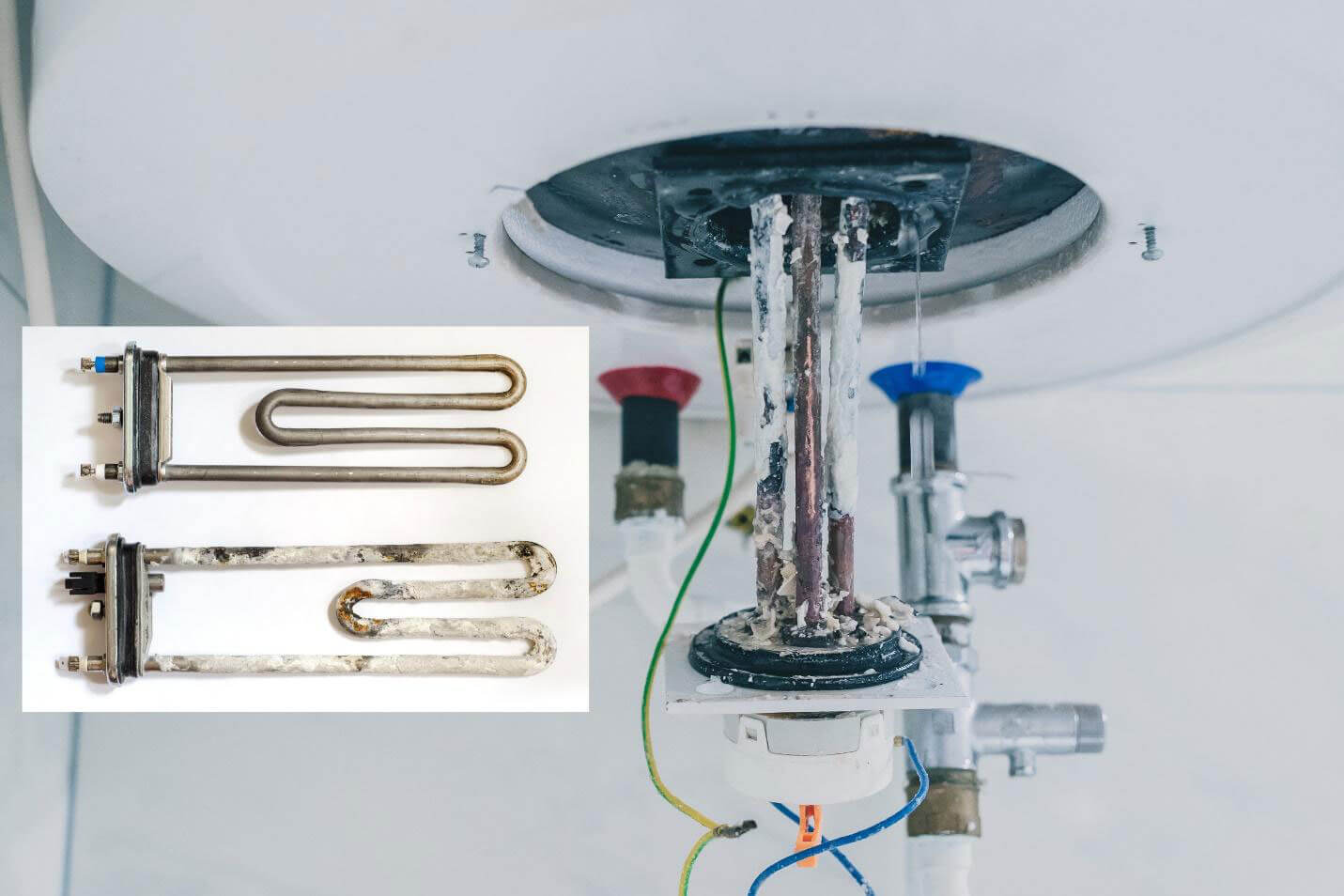
Untreated hard water can quietly cost a commercial facility thousands of dollars a year in wasted energy, extra chemical use, and premature equipment failure, and in most cases a properly sized commercial water softening system pays for itself in under two years. The culprit is scale: dissolved calcium and magnesium in groundwater build up inside boilers, heat exchangers, cooling equipment, and pipelines, insulating heat transfer surfaces and forcing equipment to work harder for the same output.
Because this buildup happens gradually, facility managers often underestimate its true financial impact until equipment efficiency has already declined significantly. The rest of this article breaks down where that cost actually comes from, how to calculate the return on investment for your own facility, and what to look for when choosing a system.
The Hidden Financial Black Hole of Hard Water
Scale acts as an insulating barrier between heating elements and water, forcing equipment to consume more energy to produce the same output. The relationship between scale thickness and energy loss is well documented and steeper than most facility managers expect:
- Data referencing the U.S. Department of Energy shows that a scale layer as thin as 1/32 inch (0.8 mm) on boiler tubes increases fuel consumption by about 2%, and once scale reaches 1/8 inch (3 mm), efficiency drops by more than 8% (Robert B. Hill Co., citing U.S. DOE data).
- Industrial boiler specialists report that a scale layer of just 1/8 inch can cause a 20–25% loss in overall thermal efficiency (Miura Boiler).
- Even a thin 1/16 inch layer of scale can raise boiler energy usage by more than 10% (ClearWater Shelton).
Scale does not need to be visually dramatic to already be costing a facility real money. By the time buildup is visible during a maintenance inspection, the equipment has likely been operating at reduced efficiency for months.
Beyond energy, scale also results in more frequent repairs and maintenance, unexpected production downtime, shorter equipment lifespan, higher chemical cleaning costs, and reduced customer satisfaction. Although each issue may appear minor on its own, together they create a substantial increase in total operating costs. In many facilities, the annual cost of hard water can exceed the purchase price of a properly engineered commercial water softening system in just a single year, making water treatment one of the most cost-effective investments available.
A Closer Look: Hard Water in Commercial Laundry Operations
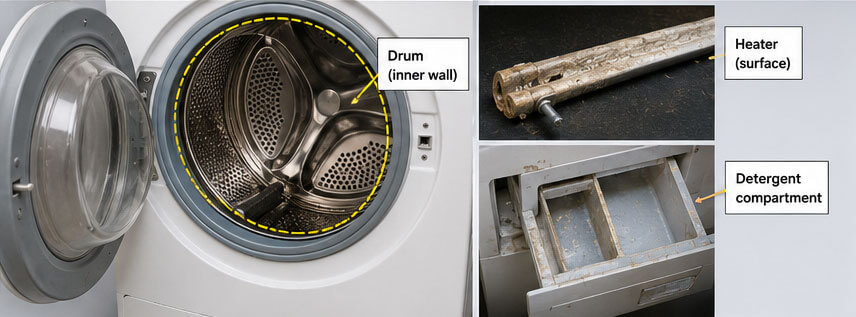
Industrial laundries provide one of the clearest examples of the economic impact of hard water. Hard water interferes with detergent performance, requiring:
- Increased detergent consumption
- Increased chemical usage
- Longer wash cycles
- Higher rinse water consumption
Facilities operating in hard water regions typically need larger volumes of detergent to fully remove oils, grease, and soil from fabric, which raises operating costs and can accelerate corrosion inside washing equipment over time. Softer water, by contrast, allows operators to use fewer chemicals while producing gentler results on textiles, extending the usable life of linens, uniforms, and towels that go through repeated wash cycles daily.
For facilities processing thousands of kilograms of laundry each day, improving water quality is not just beneficial. It is essential.
Boilers, cooling systems, and laundry operations all point to the same conclusion: the fix is choosing and correctly sizing a water softening system for the facility's actual water chemistry and demand.
Understanding Commercial Water Softening Technologies
Choosing the appropriate water softening technology depends on water quality, application requirements, operating costs, and maintenance strategy.
Ion Exchange Softening
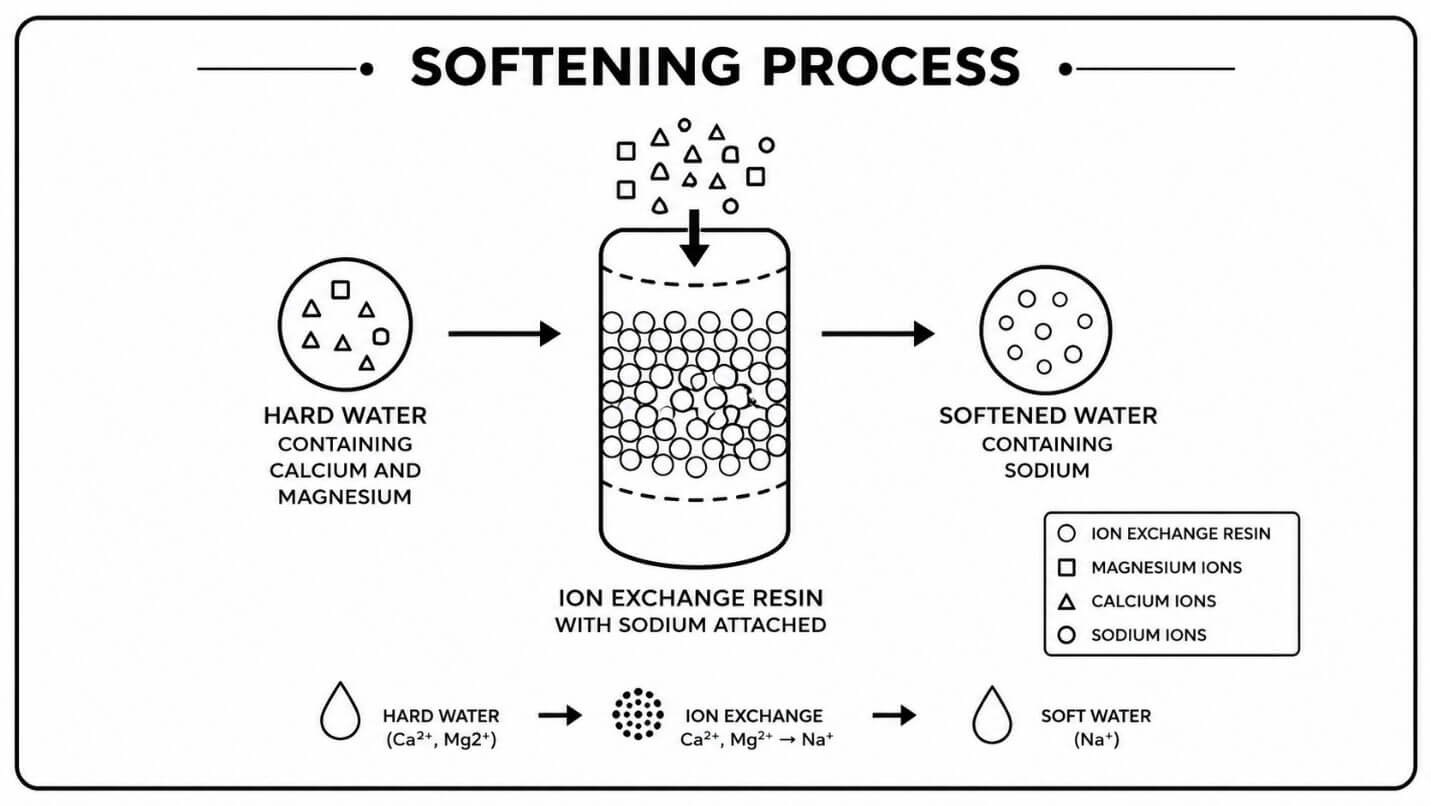
Ion exchange remains the most widely used technology for commercial and industrial water softening systems. The process uses specially engineered ion exchange resin beads that exchange hardness minerals (calcium and magnesium) for sodium or potassium ions. Once the resin reaches its capacity, it is regenerated using a salt solution before being returned to service.
Advantages
- Highly effective hardness removal
- Proven commercial reliability
- Suitable for large flow rates
- Consistent water quality
- Well-established maintenance procedures
Physical Water Conditioning Technologies
Several non-chemical technologies, including magnetic, electromagnetic, and electronic water conditioning systems, are also available. Rather than removing dissolved minerals, these technologies aim to influence how mineral crystals form, potentially reducing the tendency for scale to adhere to surfaces.
Depending on water chemistry and operating conditions, physical conditioning technologies may offer benefits in selected applications. However, because performance can vary, they should be evaluated carefully based on the specific requirements of the facility. For applications that require consistent hardness removal, ion exchange remains the established industry standard.
Calculating the ROI: A Simple Framework
Facility managers evaluating a commercial water softening system typically use the same basic logic industrial water treatment engineers use to justify capital equipment:
Payback Period = System Investment ÷ Annual Savings
Annual savings should combine several measurable categories:
| Savings Category | What to Measure |
|---|---|
| Energy savings | Reduced fuel or electricity from restored heat transfer efficiency |
| Maintenance savings | Fewer descaling services, valve replacements, and emergency repair calls |
| Chemical/detergent savings | Reduced consumption in boilers, laundry, and cleaning-in-place systems |
| Downtime avoidance | Value of production hours not lost to unplanned equipment failure |
| Extended equipment lifespan | Deferred capital cost of replacing prematurely failed equipment |
Illustrative example: A facility operating a mid-sized steam boiler spends roughly $60,000 per year on fuel. If untreated hard water has allowed roughly 1/8 inch of scale to form on heat transfer surfaces, that alone can represent an 8–25% efficiency penalty depending on system design. Roughly $4,800 to $15,000 in avoidable fuel cost per year, before accounting for maintenance, downtime, or chemical savings. Against a properly sized commercial softening system, this alone can produce a payback period well under two years.
This is illustrative math, not a quote. Actual payback periods vary by water hardness, flow rate, fuel cost, and equipment type. A water treatment engineer using your facility's actual water hardness, hourly demand, and fuel cost data can turn this framework into a specific number for your site, following the same ROI methodology used across the industrial water treatment industry.
Total Cost of Ownership (TCO)
When evaluating the Total Cost of Ownership (TCO) of a commercial water softening system, the following factors should be considered:
- Initial equipment investment
- Installation costs
- Salt consumption
- Maintenance requirements
- Water consumption
- Energy savings
- Reduced equipment repair costs
- Extended equipment lifespan
- Reduced production interruptions
Why Proper System Design Matters More Than Equipment Size
Selecting the correct water softener begins with understanding the facility's actual water usage.
- Water Hardness: Incoming water should be professionally analyzed to determine hardness levels and overall water chemistry.
- Peak Flow Rate: The system must be capable of meeting maximum demand without reducing treatment efficiency.
- Daily Water Consumption: Daily usage determines resin capacity and regeneration frequency.
- Future Expansion: Facilities planning production growth should ensure sufficient capacity for future demand.
- Redundancy Requirements: Critical facilities such as hospitals, pharmaceutical plants, and manufacturing lines may require duplex or twin-alternating systems to maintain continuous operation during regeneration.
Proper hydraulic design ensures treated water is distributed efficiently throughout the building without pressure loss or untreated bypass.
How Puricom Helps Customers Maximize ROI
For more than four decades, Puricom has specialized in designing and manufacturing professional water treatment solutions for commercial and industrial applications. Rather than offering one-size-fits-all products, Puricom works closely with distributors, OEM partners, system integrators, and project engineers to develop systems tailored to each customer's operational requirements.
By carefully evaluating water quality, flow demand, installation conditions, and long-term operating objectives, Puricom helps customers select solutions that maximize efficiency while protecting valuable equipment and reducing lifecycle costs. Whether supporting office buildings, hotels, healthcare facilities, industrial manufacturing, commercial laundries, or other large-scale applications, Puricom's engineering expertise helps businesses transform water treatment from a maintenance expense into a strategic investment.
Want to know what hard water is actually costing your facility?
Contact Puricom's engineering team for a water quality assessment and a facility-specific ROI estimate.